Design Companion
Design Companion
Designing a reflective learning system that transforms observation, qualitative inquiry, and lived experience into actionable design practice.

Project Snapshot
Role
Experience Designer / Researcher
Timeline
2025–Present
Focus
Reflective systems, participatory inquiry, learning experience design
Designing for Reflection Beyond the Traditional Notebook
Many educational reflection tools prioritize capturing information over meaning-making. Students are often asked to document observations, collect notes, or complete isolated assignments without a cohesive system that helps them connect lived experience, qualitative inquiry, systems thinking, and iterative design practice over time.
As part of my work in educational design and participatory inquiry, I wanted to explore how reflective documentation itself could become a designed experience—something tactile, visual, emotionally resonant, and structurally supportive of deeper synthesis.
The Design Companion emerged as an attempt to support undergraduates studying educational design bridge research, design, reflection, and material interaction through a portable artifact system intentionally crafted to support ongoing inquiry rather than static record-keeping.
Creating a System for Iterative Meaning-Making
The project explored how physical design artifacts might help learners:
move between observation and synthesis more fluidly
externalize emerging patterns and questions
connect personal experience to systems-level thinking
document evolving insights across time
engage reflection as an active design process rather than passive reporting
Rather than functioning as a conventional workbook, the companion was designed as an evolving inquiry ecosystem integrating prompts, visual frameworks, reflective structures, and tactile interaction.
Designing the Companion System
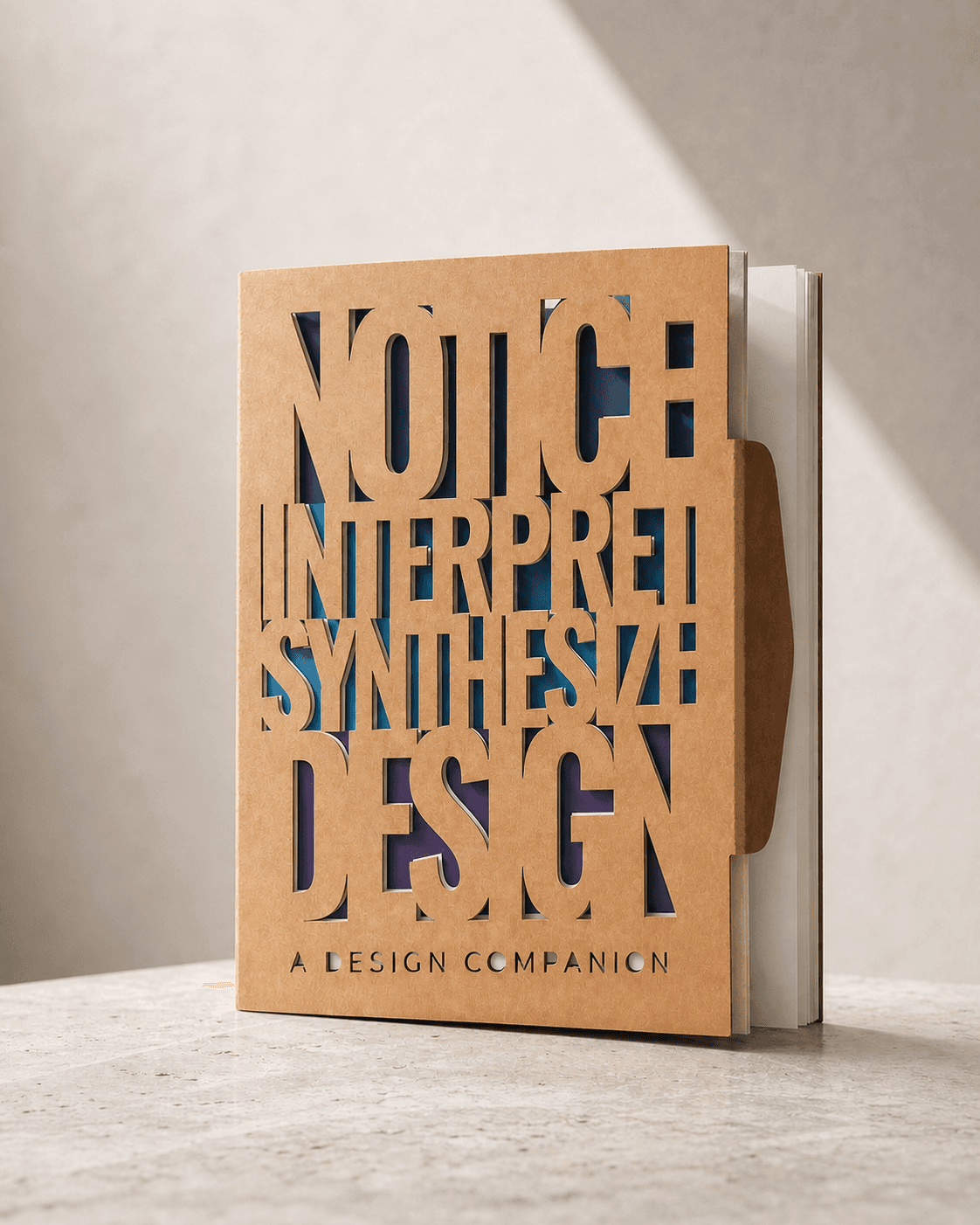
The Design Companion was conceived as both a pedagogical tool and a tactile editorial object. Through laser-cut covers, hand assembly, layered materials, and portable construction, the piece invited students into a slower, more reflective mode of engagement.
Its visual language drew from independent magazines, artist books, and contemporary editorial systems — blending structured typography, systems-thinking graphics, and tactile interaction into an experience that felt intentional, portable, and deeply human-centered rather than conventionally academic.
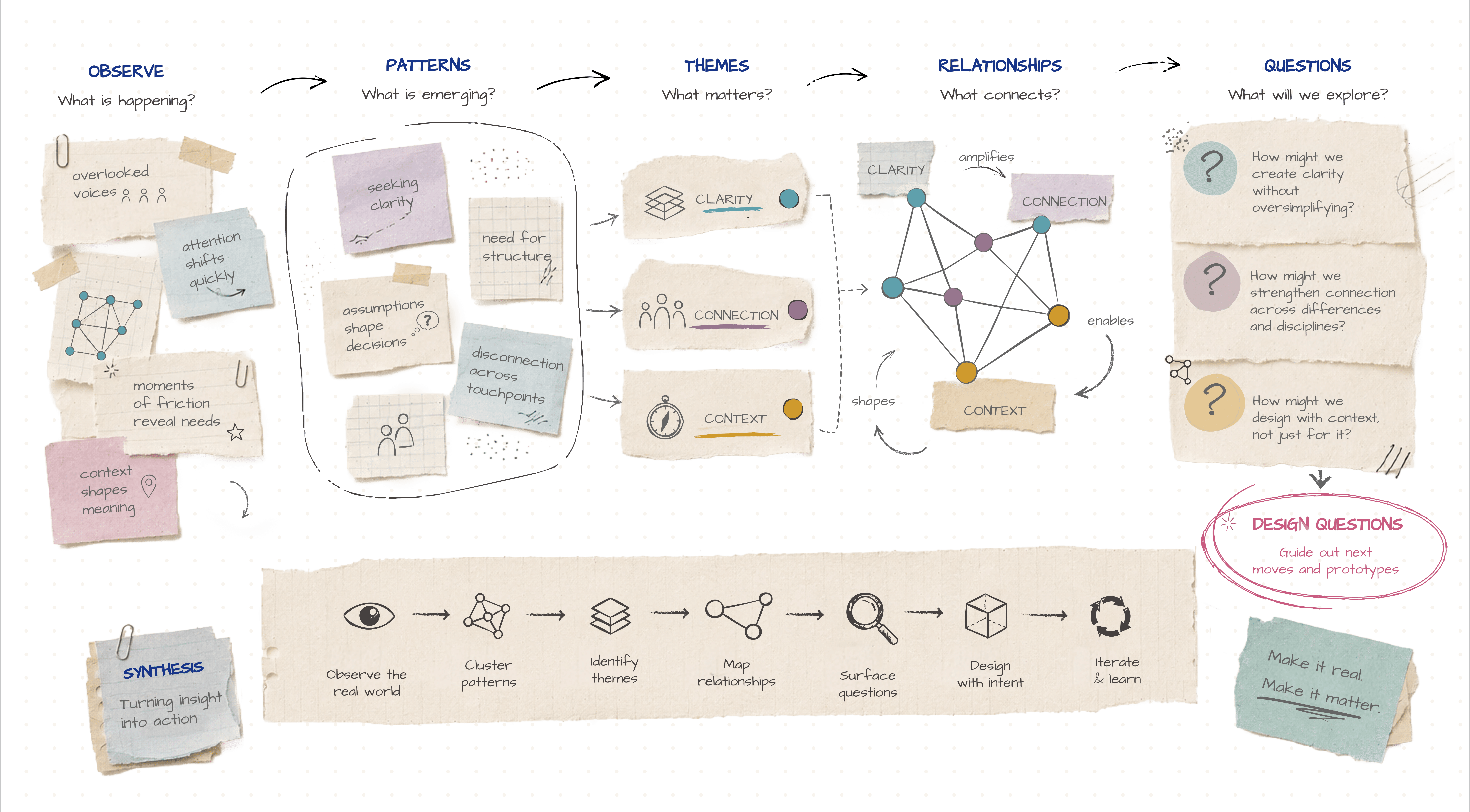

Embedded prompts, visual frameworks, annotation structures, and reflective exercises supported ongoing synthesis across observation, dialogue, fieldwork, and collaborative critique.
Tools including affinity clustering, visual mapping, and systems prompts encouraged students to externalize emerging patterns and move iteratively between noticing, interpretation, synthesis, and collective meaning-making over time.
Designing for Continuity Beyond the Classroom
The Design Companion emerged during a transitional moment within the Educational Design for Transformative Social Futures specialization at the Earl Center for Learning & Innovation—a program sequence I helped design and guide from its inception. As students prepared to enter their senior practicum year, I began thinking about what kinds of structures might continue supporting their inquiry once regular coursework and mentorship became less immediate.
Many students were generating rich observations, reflections, and design insights across semesters, but those ideas often became fragmented across notebooks, documents, and temporary workshop artifacts. The companion emerged as an attempt to design a more enduring form of pedagogical support: an inquiry system students could revisit as their projects, questions, and perspectives evolved over time.
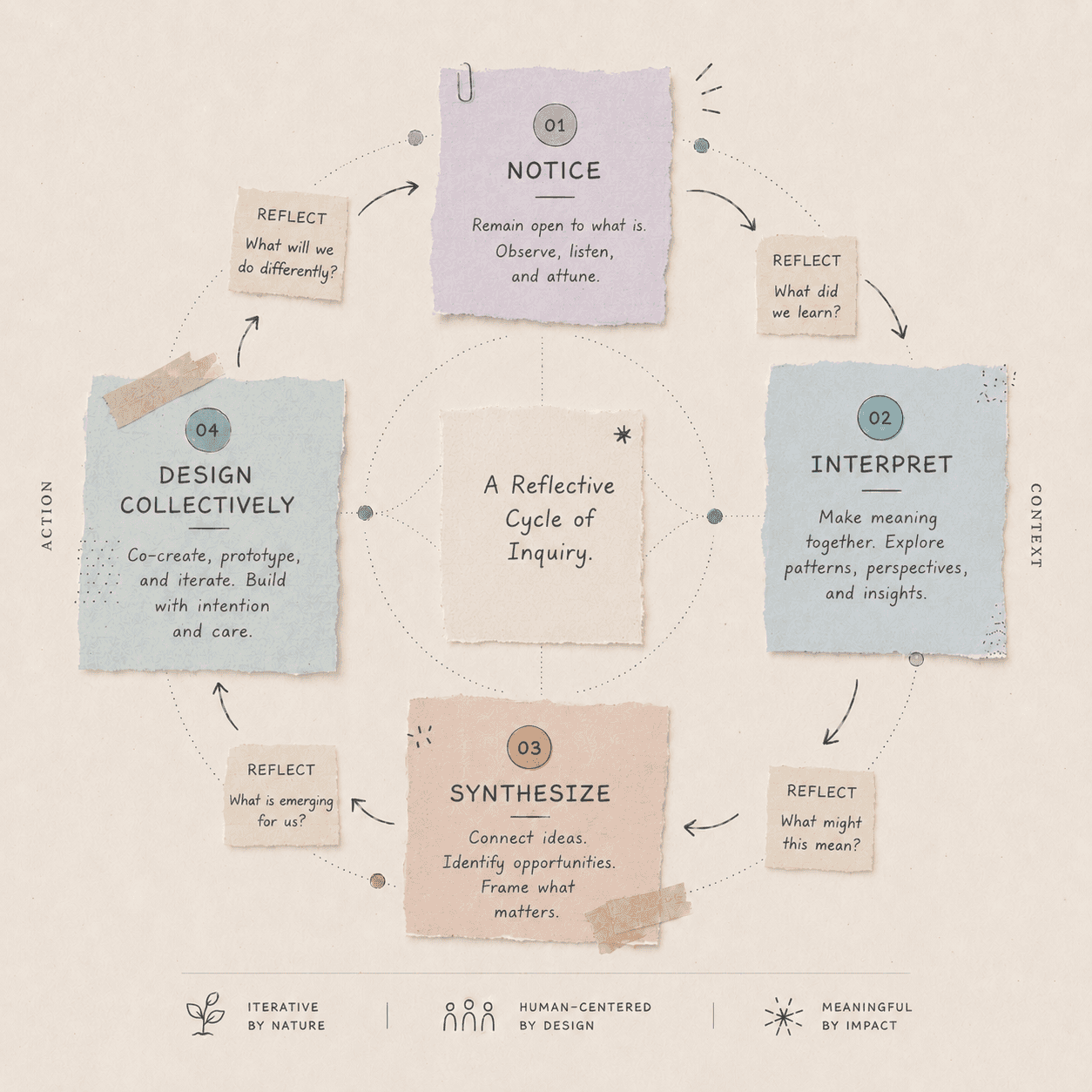
“Design is not linear. It moves forward by looping back.”
Reflection cycle framework from the Design Companion
The companion was designed around the idea that reflection is iterative rather than linear. Students were encouraged to return repeatedly to observation, interpretation, synthesis, and redesign as their understanding evolved over time.
Early prototype feedback suggested the idea resonated strongly. Several students shared that they wished they had access to a resource like it earlier in the program.
Designing for Intellectual & Expressive Agency
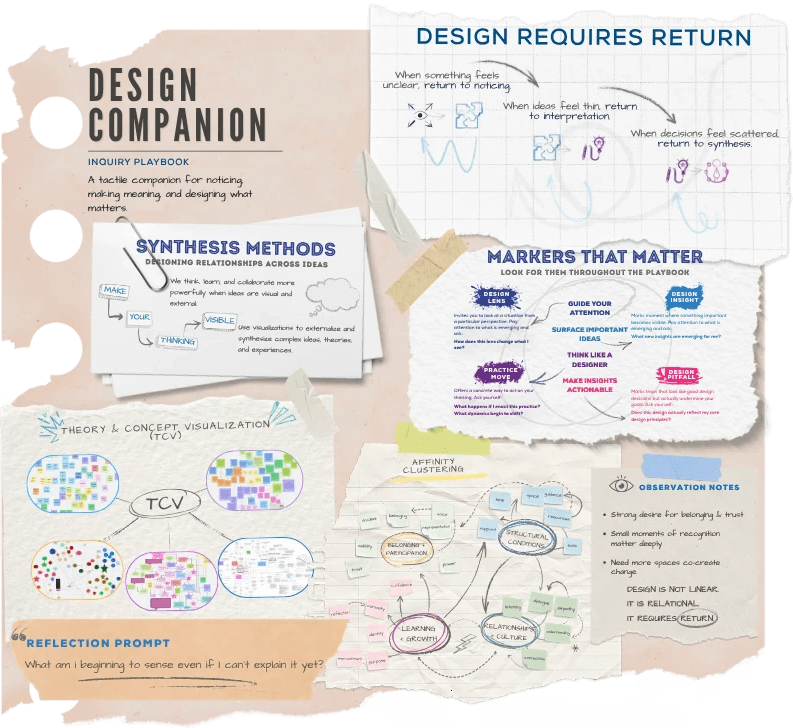
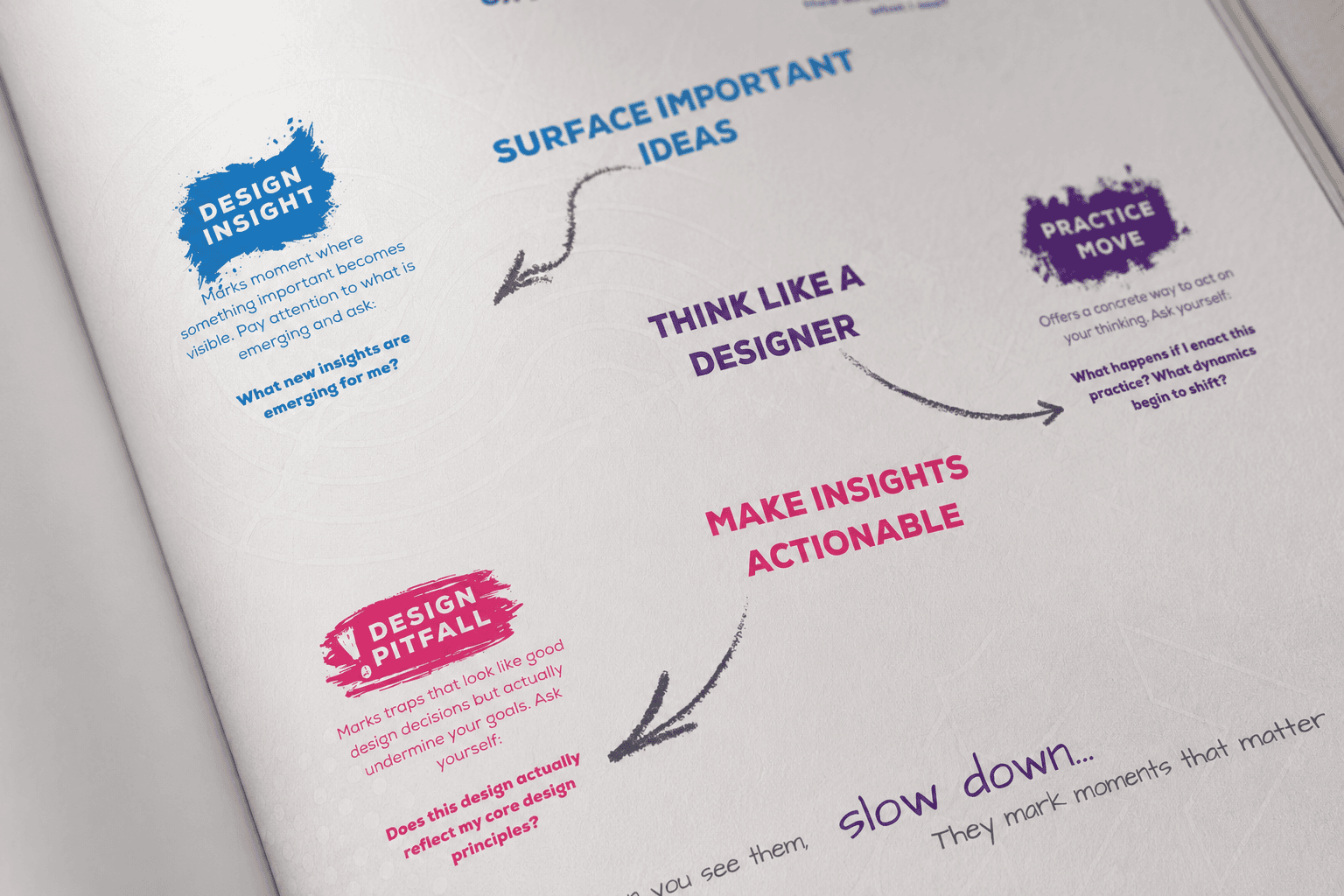
The companion integrated prompts, visual frameworks, annotation systems, and reflective structures designed to help students externalize emerging ideas and revisit them over time. Rather than functioning as isolated exercises, these artifacts were intended to support movement between observation, interpretation, synthesis, and collaborative meaning-making.
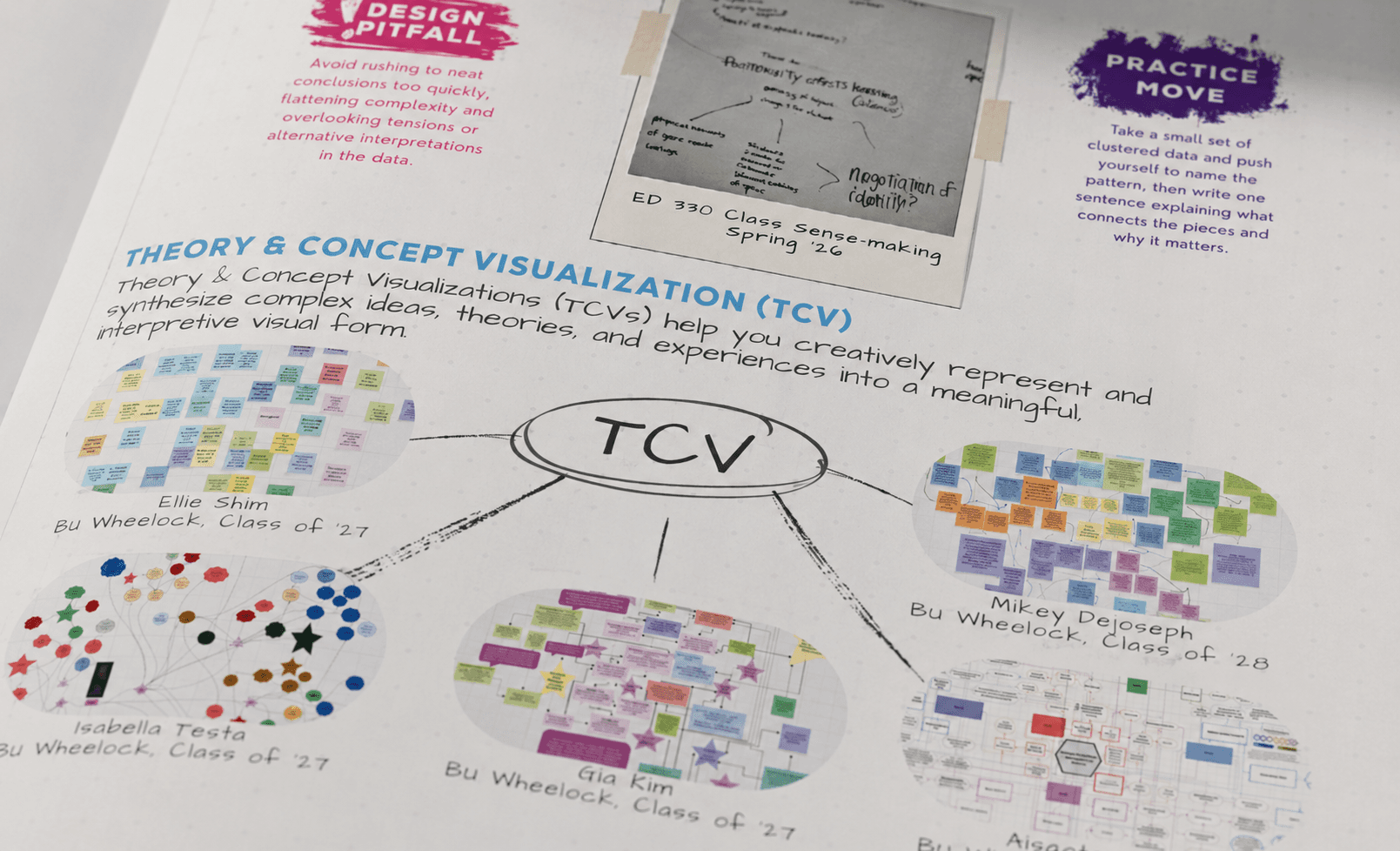
Across the playbook, students encountered systems maps, thematic clustering methods, reflective lenses, and visual inquiry prompts that encouraged thinking spatially, relationally, and iteratively. The material structure of the companion — portable, tactile, and revisitable — was designed to support slower forms of reflection often difficult to sustain within conventional coursework rhythms.
01—Built to be written in
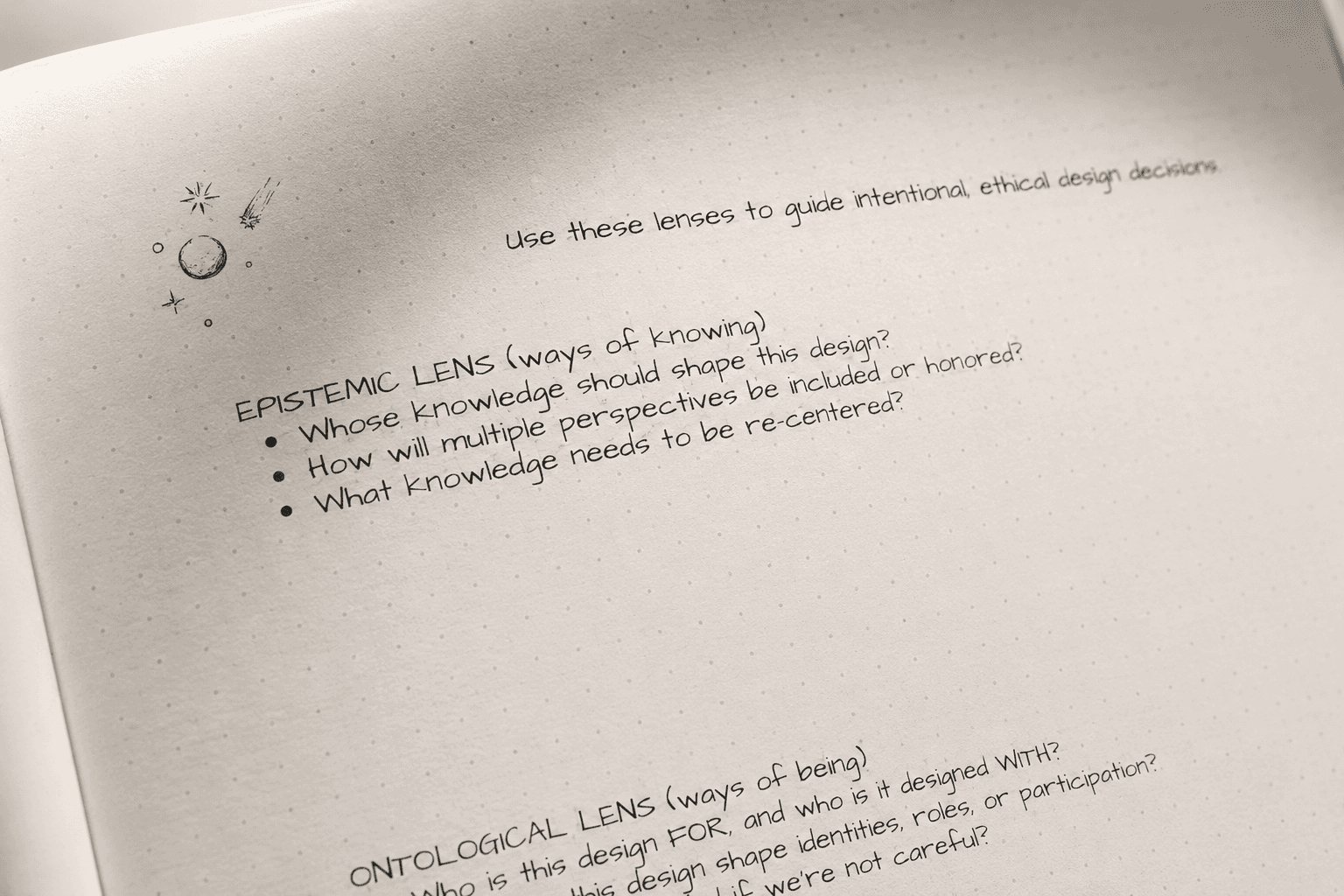
02—Blue sticky note
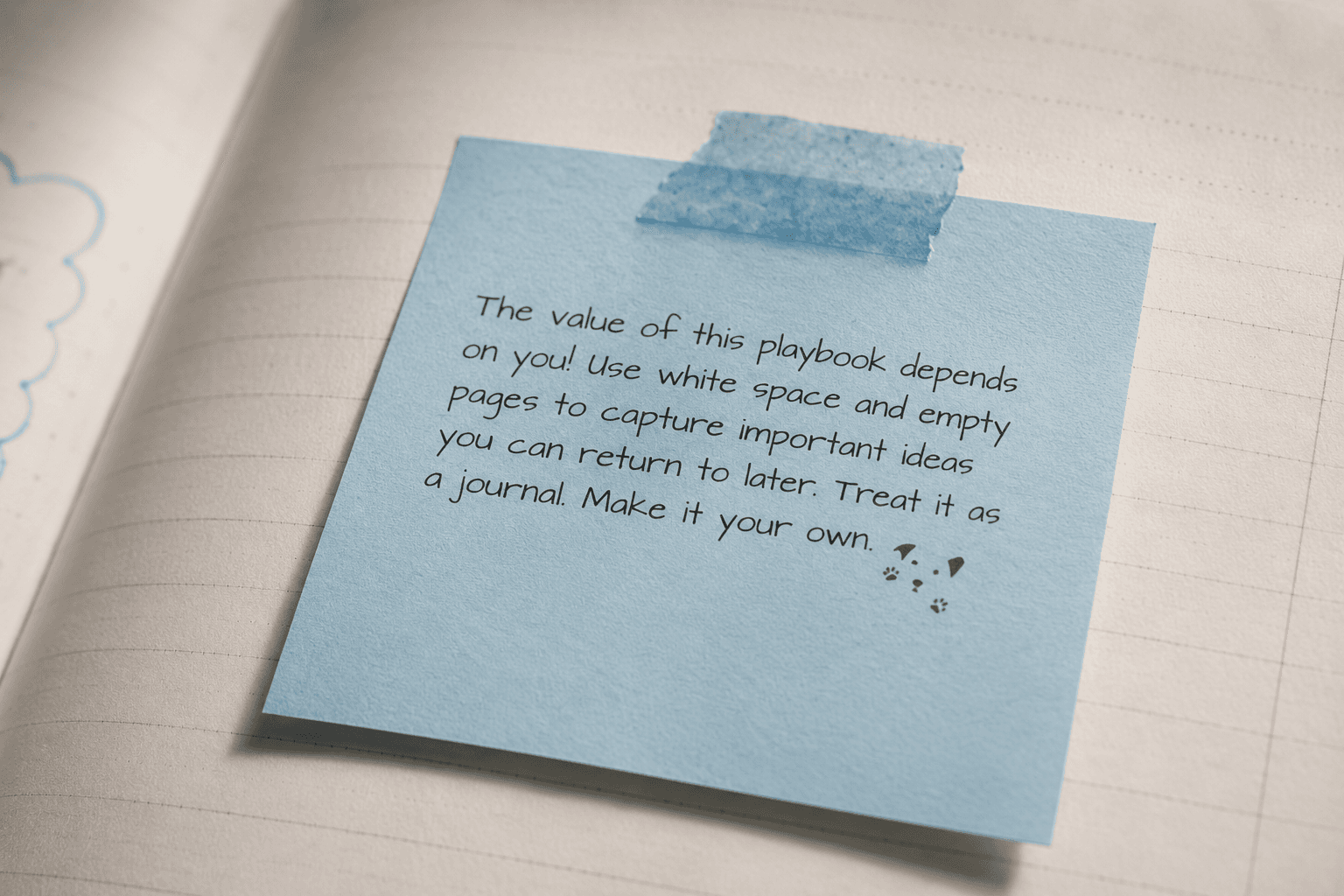
03—Design requires return
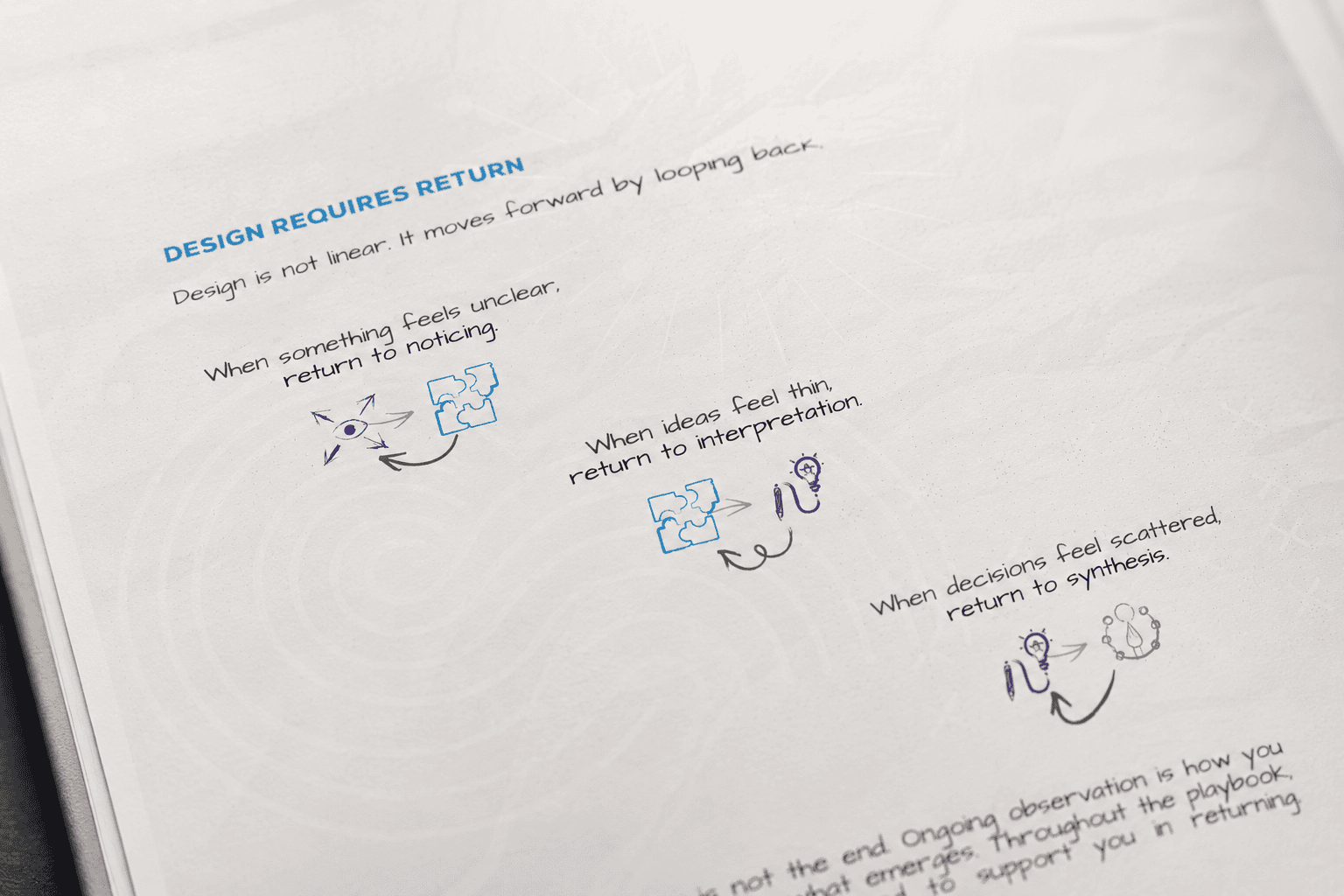
04—Theory operationalized through inquiry
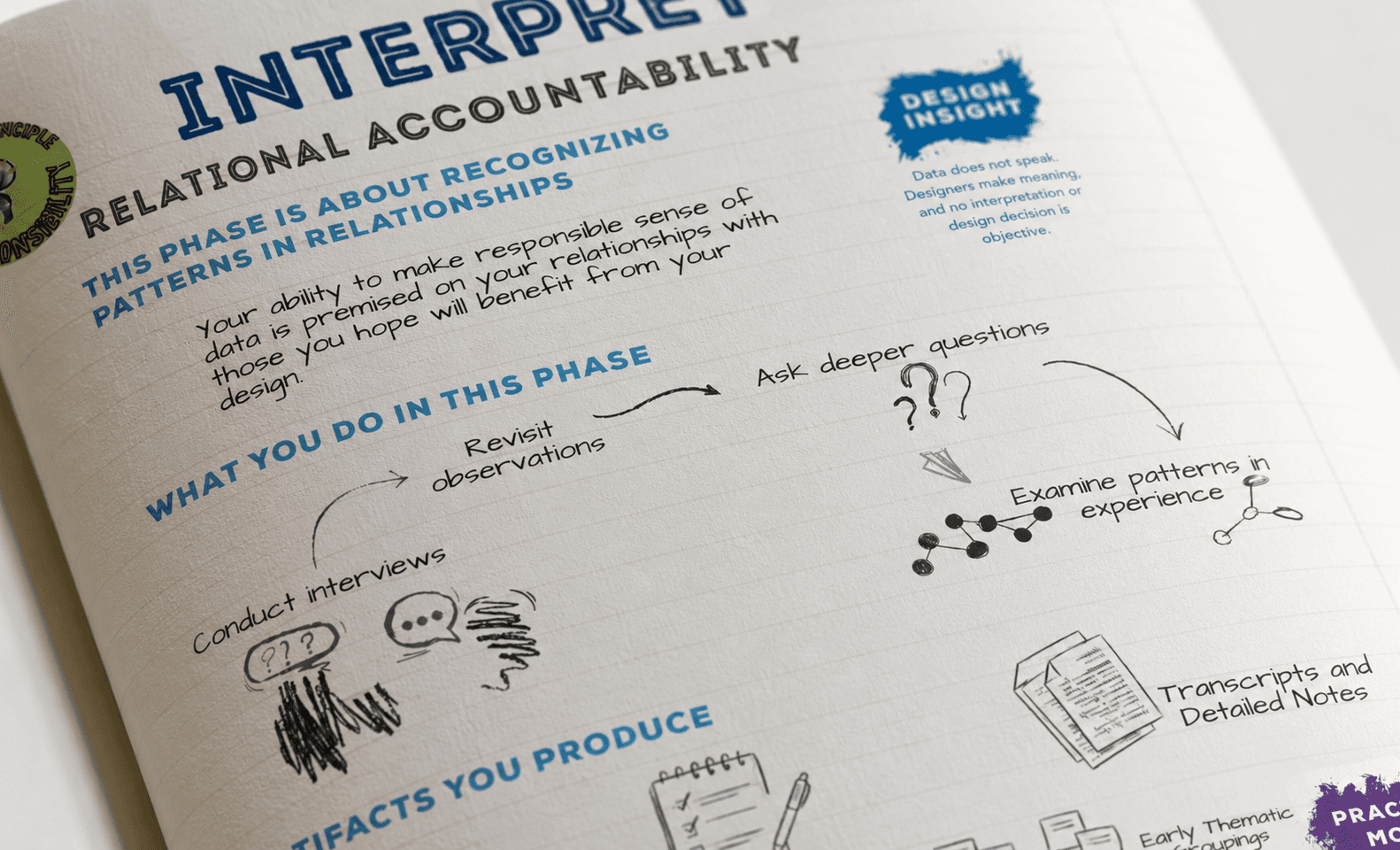
05—Visual systems used to externalize thinking
06—Meaning shaped through interaction
Design Principles
These principles frame the playbook as both a tactile object and a pedagogical system. Each one connects a material design decision — paper, cuts, folds, fabrication, sequence — to a deeper question about how students enter reflection, make ideas tangible, and carry inquiry forward over time.


Reflections
The Design Companion became an exploration of how pedagogical support might be made material: something students could carry, mark, question, and return to as their thinking evolved. More than a workbook, the project was designed as a portable structure for reflection, interpretation, and self-authored inquiry beyond the boundaries of a single course.
Because the fully fabricated version was completed near the end of the semester, the companion was not implemented as a full classroom tool. However, students’ responses to the prototype suggested a strong desire for enduring resources that could support them as they moved into more independent, community-based design work.
For me, the project reinforced a central belief in my practice: educational design is about creating conditions for people to recognize what they know, articulate what they value, and translate those understandings into meaningful action.

Next case study
View SIDE-EYE
View SIDE-EYE
View SIDE-EYE
Continue to the reflective learning system case study, where observation and editorial design become tools for inquiry.
Continue to the reflective learning system case study, where observation and editorial design become tools for inquiry.